
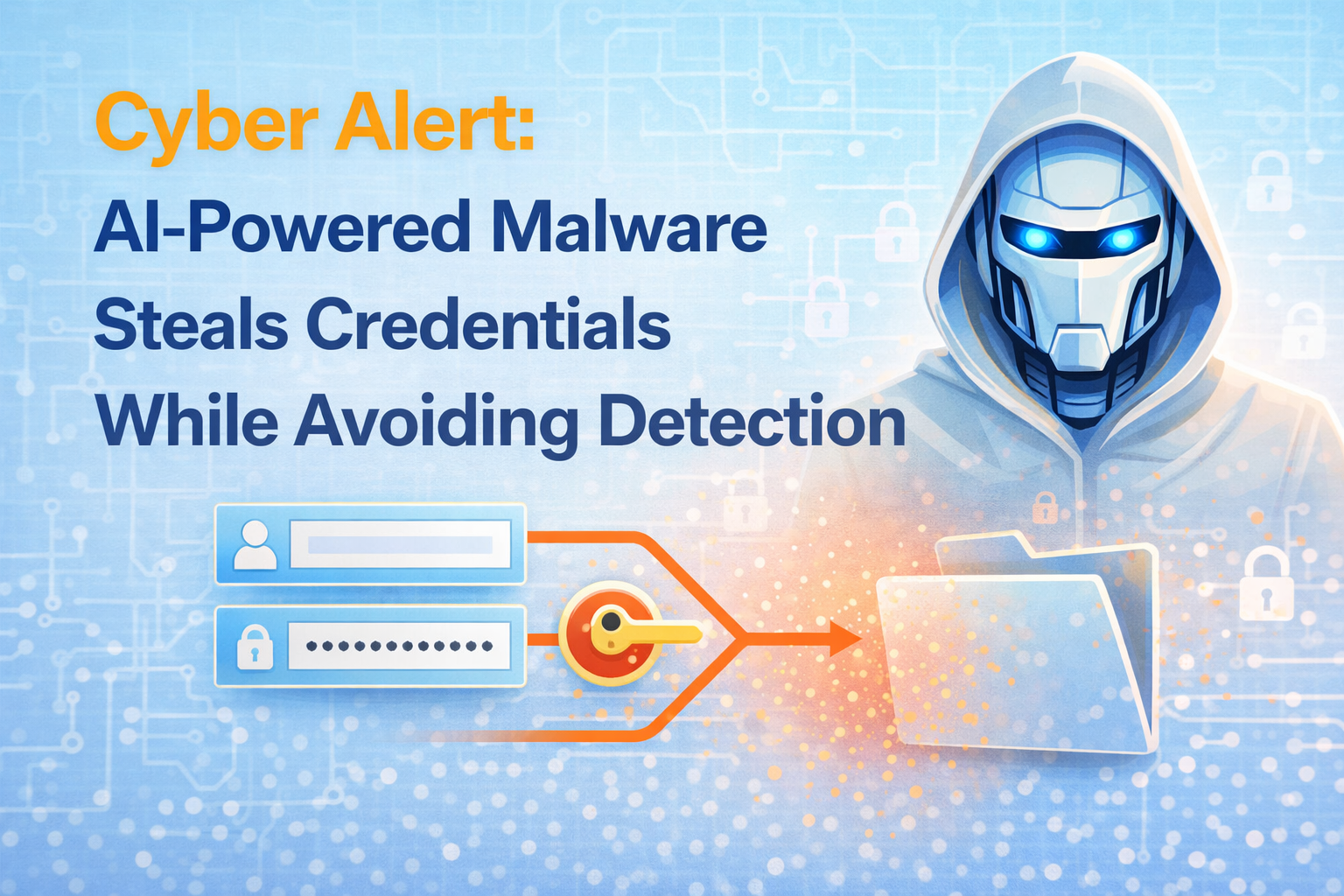
Cybercriminals are evolving—and now they’re using artificial intelligence to make their attacks more effective and harder to detect.
A recent report from Dark Reading highlights a new threat called Deepload, an AI-powered malware campaign designed to steal user credentials while staying under the radar.
What Is Deepload?
Deepload is a sophisticated malware tool that uses AI-driven techniques to:
- Steal login credentials
- Avoid detection by security tools
- Adapt its behavior to remain hidden
Unlike traditional malware, Deepload doesn’t follow predictable patterns—making it much harder for antivirus and endpoint protection systems to catch.
What Makes This Attack Different?
This isn’t just another piece of malware—it represents a shift in how cyberattacks are executed.
🤖 AI-Enhanced Evasion
Deepload can dynamically adjust how it behaves, helping it bypass traditional detection methods.
🔐 Credential Theft Focus
Instead of destroying systems, it quietly targets usernames and passwords—giving attackers long-term access.
🕵️ Stealthy Operation
It operates in the background, often without triggering alerts or noticeable system issues.
Why This Matters for Your Business
Credential theft is one of the most damaging types of cyberattacks.
Once attackers gain access to valid credentials, they can:
- Log in as legitimate users
- Access sensitive systems and data
- Move through your network without raising suspicion
👉 This makes detection significantly harder and increases the potential impact of a breach.
How These Attacks Typically Work
Most credential-stealing malware campaigns follow a familiar path:
- Initial Access
- Phishing email, malicious download, or compromised website
- Silent Installation
- Malware installs without obvious signs
- Credential Harvesting
- Captures login details from browsers, apps, or memory
- Data Exfiltration
- Sends stolen credentials back to attackers
Cyber Smart Takeaway
AI isn’t just transforming business—it’s also supercharging cybercrime.
Attackers are now using smarter, more adaptive tools that can bypass traditional defenses.
What You Should Do Right Now
✅ Enable Multi-Factor Authentication (MFA)
Even if credentials are stolen, MFA adds a critical layer of protection.
✅ Train Your Team to Spot Phishing
Most attacks still start with human interaction—awareness is key.
✅ Keep Systems and Software Updated
Patching vulnerabilities reduces entry points for attackers.
✅ Use Endpoint Detection & Monitoring
Look for tools that go beyond basic antivirus and can detect unusual behavior.
✅ Limit Access (Least Privilege)
Reduce the damage potential by ensuring users only have access to what they need.
Why This Is a Wake-Up Call
Traditional security tools alone are no longer enough.
As attackers adopt AI, businesses must shift toward:
- Behavioral detection
- Proactive monitoring
- Strong identity and access controls
Stay Ahead of Evolving Threats
Cyber threats are becoming more advanced—and more difficult to detect.
👉 Join the Cyber Smart Resource Insider Community to receive real-world threat updates, practical defenses, and actionable cybersecurity guidance delivered straight to your inbox.